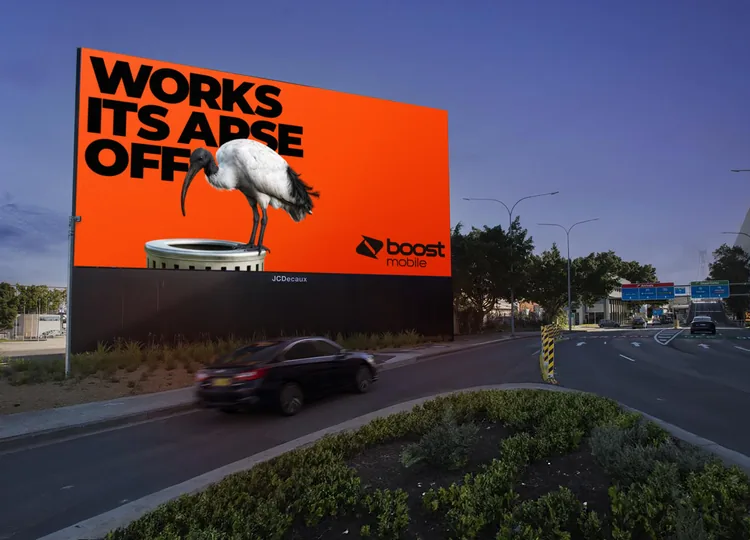
Something fundamental is shifting in marketing and the closest historical parallel is 2008, when earned media budgets grew by roughly 40% as brands, squeezed by recession, discovered that credibility could outperform media spend.
Earned media is back
Today, interest in earned media is exploding again, but for entirely different reasons.
Back then, it was about efficiency. Now, it's about survival.
In 2008, earned media offered a more cost-effective route to audience than traditional media buying. In 2026, trust has become the scarcest commodity in marketing — and the brands winning right now aren't necessarily the ones with the biggest budgets. They're the ones being talked about.
Buying your way into relevance is over
The era of buying your way into relevance is giving way to something more durable and future-proof: earning it. Earned media, organic creator content, and fame-driving campaigns aren't the supporting act anymore. For the smartest brands in Australia, they're the headline.
That's the earned media advantage. But it goes deeper — because the way consumers discover brands is undergoing a structural transformation.
What does AI say about your brand?
Enter the AI dimension, and this one is moving fast. As consumers increasingly turn to LLMs like ChatGPT, Perplexity, and Google's AI Overviews to inform brand discovery and purchase decisions, the question is no longer just "what does Google say about us?" It's: what does AI say about us?
Why LLM-optimised earned content is a present-tense advantage
This distinction matters enormously. Brands that invest in LLM-optimised earned content now are building the digital footprint that shapes those AI-generated answers. That's not a future consideration — it's a present-tense competitive advantage hiding in plain sight.
AI pulls from third parties
And the platforms answering those questions aren't prioritising paid ads or brand-owned websites — they're pulling from independent, third-party sources.
The implications are stark: around 85% of AI-generated brand responses are built from earned content; credibility and external validation have become the currency of discoverability; and if a brand isn't being talked about externally, it's far less likely to show up at all.
The core insight is this: AI doesn't repeat what brands say about themselves — it repeats what others say about them.
Inside Australia's $1.2 billion creator economy
Then there's the Australian creator economy, which is independently reinforcing the same trend. Creator marketing has matured from an experimental line item to core growth engine, and the budgets are following.
The influencer marketing market in Australia is now valued at $1.2 billion in 2026, growing at 18.7% year-on-year — with a projected CAGR of 15.4% through to 2030, reaching US$1.59 billion in market volume.
It's not a creator story — it's a credibility story
But this isn't just a creator story. It's a credibility story.
Around 58 percent of consumers say they've purchased a product off the back of an influencer endorsement. Yet the brands extracting the most value from this channel aren't treating creators as ad placements — they're treating them as genuine storytellers. That's earned content, and the distinction is everything.
Earned media works across the entire purchase journey
Earned media from publishers and creators was never just a top-of-funnel play — it has always had the power to influence across the full purchase journey. But what's changed is the stakes. Earned content now shapes how brands show up in the environments rapidly becoming the default for search and brand discovery: AI-powered, algorithmically curated, and almost entirely beyond the reach of paid media.
So, is earned media the lead channel now?
So, is earned media about to become the lead channel for marketers? The evidence suggests it may already be.